



Watch my video here: How to stay cool during the warm Pitta season? Ayurvedic cooking in the summer.
In the summer temperatures can rise considerably, not only in the area but also in yourself. Summer is the Pitta season, in which the Pitta Dosha (fire) is the most dominant. The characteristics of Pitta are fiery and warm, which you also experience during hot summer days.
How do you stay cool during the warm Pitta season? According to Ayurveda, we can balance Pitta with our diet. In this blog I will tell you more about the workshop I followed with Silvia de Haas: Ayurvedic cooking in Summer with dishes to keep you cool during the warm Pitta season.
I have previously attended an Ayurvedic cooking workshop with Silvia, where I was inspired by Ayurveda and the Vedic kitchen. You can read more about this in my previous blog post Vegan cooking with the Vedic kitchen.
Ayurveda and the Vedic Kitchen
Ayurveda is a holistic medicine that dates back to the Vedic era, three to five thousand years ago in India, North Africa and part of the Middle East. According to Ayurveda, all discomforts begin in digestion, both physical and mental digestion. Many Ayurveda applications are also used in the Vedic kitchen. The Vedic kitchen is aimed at keeping your digestion optimal.
The Five Elements
Everything in the universe is made up of the five elements:
Ether, air, fire, water and earth.
The Three Doshas
The three body types or Doshas are composed of the five elements. The three Doshas are not only present in man, but in all matter. The following three body types are composed of the five elements:
Vata: ether and air
Pitta: fire and water
Kapha: water and earth
Vata
Vata consists of the lightest elements, ether and air. Vata is everywhere with a lot of movement. A Vata person is often agile, starting many things at once, but finishing something on the other hand is more difficult for them. A Vata in balance has a lot of creativity and a lively energy.
Pitta
Pitta consists of fire and (some) water. Pitta is full of warmth, pungent and hot. A Pitta person is goal-oriented, prefers to work in a clear structure so that there is control, and likes to make a plan whatever he goes for. However, if things go a bit against you, a Pitta has a short fuse.
Kapha
Kapha consists of water and earth. Kapha gives stability. A Kapha person is generally calm, has a steadfast character, does not jump into action very quickly, but continues at his own pace. A Kapha has a sensitive and emotional life inside, but you see little or nothing of that on the outside.
The Seasons
From Ayurveda we cook in a balanced way with the seasons. You temper the elements that are highest from the outside in that season. If you eat and live in harmony with nature, you will see that what grows in your environment is also good for you at that moment. In Ayurveda they have three seasons. The three Doshas can also be found in the three seasons.
Autumn
Autumn is the Vata season. In autumn there is a lot of movement with the falling of the leaves and the unpredictable weather. It gets colder outside and you start cooking warming by stewing the food, making stews and using warming herbs.
Winter
Winter is the Kapha season. Winter is stable, the time when it gets quiet. The landscape may be covered by a layer of snow. Just like the traditionally known Dutch ginger nuts, you will see warming spices such as cinnamon, cardamom and cloves in the winter. You ensure that your digestion warms up and keeps going.
Summer
Summer is the Pitta season. The period leading up to summer is the time to clean. In nature you see this reflected in the leafy vegetables that arise, which are ideal for a cleansing cure. The asparagus and celery of the Pitta season have a diuretic effect.
The Six Flavors
In Ayurveda we cook with the six flavors: sweet, sour, salty, bitter, pungent and astringent. To balance Pitta, the flavors sweet, bitter and astringent are mainly used. To balance Vata these are the flavors sweet, sour and salty and to balance Kapha the flavors are sharp, bitter and astringent.
Herbs & Spices
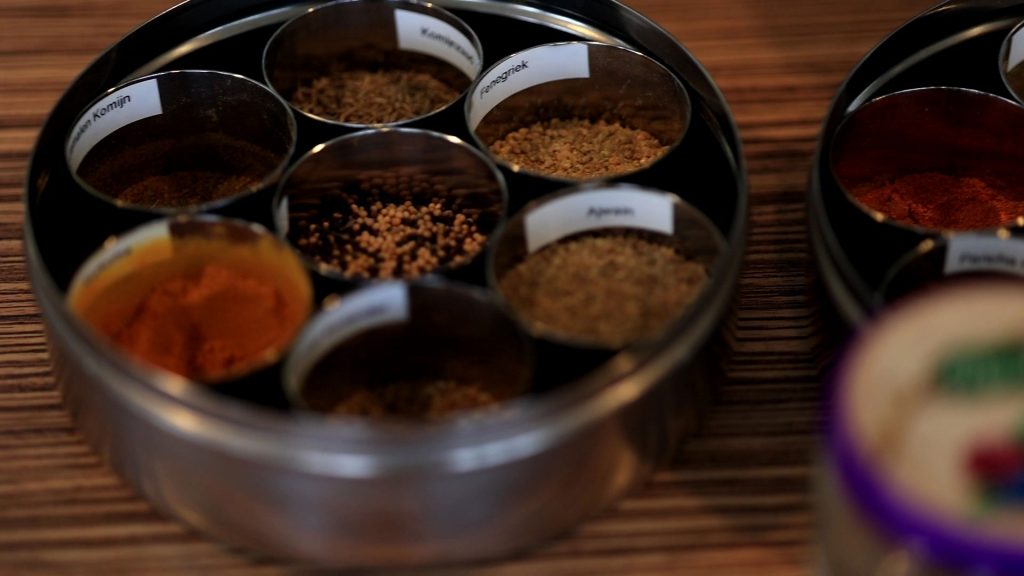
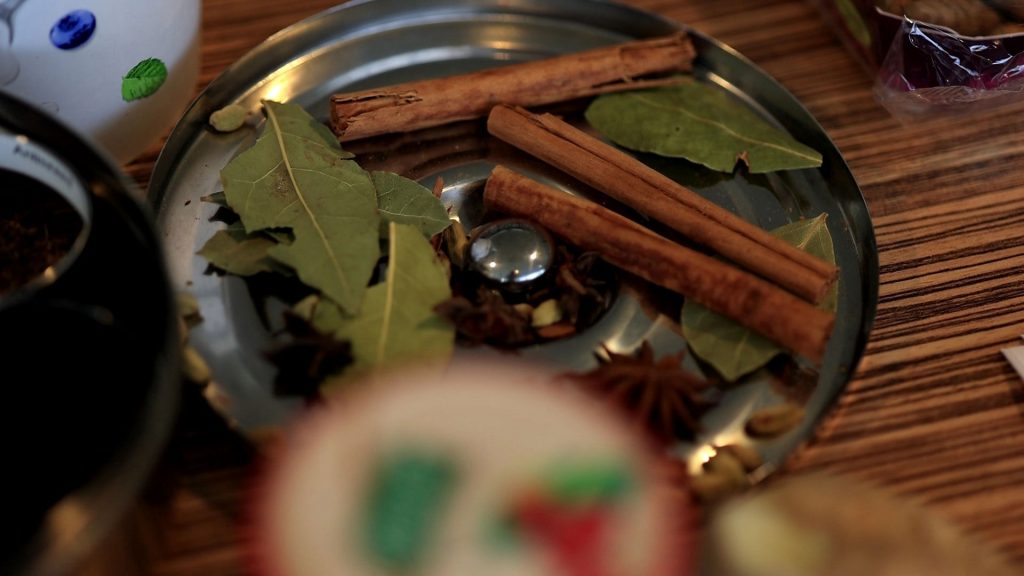
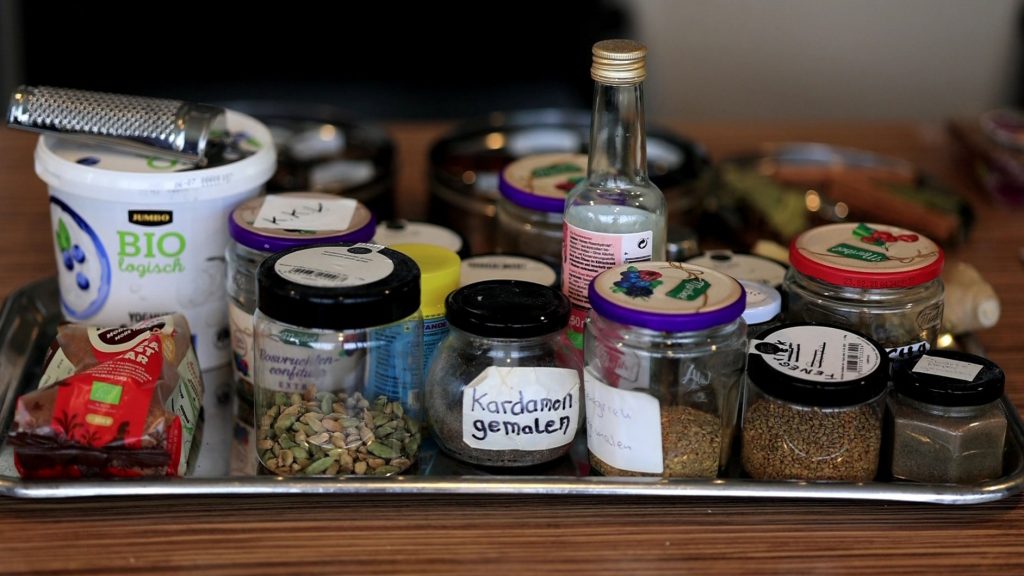
The herbs and spices we used during the cooking workshop are good for the Pitta season. Herbs and spices can be warming and increase the digestive fire, or they can be cooling and temper the digestive fire. We lower the Pitta in the summer by cooling cooking with the use of the right food, herbs and spices.
Pippali
Pippali is a long pepper, a Bengal long pepper. Pippali is the only type of pepper that does not have a heating effect in your body, because the conversion in your digestive system is different. Pippali has the taste of pepper, but it is slightly milder in taste and it also smells slightly different.
For a Pitta person: the more heat in the body, the greater the chance of inflammation. Pippali is a good alternative to pepper.
Fenugreek
Fenugreek is a very bitter herb and it also has a diuretic effect. Fenugreek is a good herb to lower Pitta. Fenugreek seeds are very hard triangles that do not dissolve in liquids, except in dairy. The taste of fenugreek is very bitter, unless you dissolve it in dairy, then the fenugreek takes on a sweet and nutty taste. We used the fenugreek in the spinach with crème fraîche and dairy.
Ajwain
Ajwain has a heating effect on the body. Especially for a Pitta person it is advisable to replace ajwain in the summer with thyme and cumin. With thyme and cumin you get the same taste as ajwain, where thyme has a cooling effect in the body. In the autumn you could use ajwain in your dishes again, because then the Vata rises. By the time it gets colder and you find yourself getting cold fingertips, it’s good to use ajwain as a warming herb.
Drinks
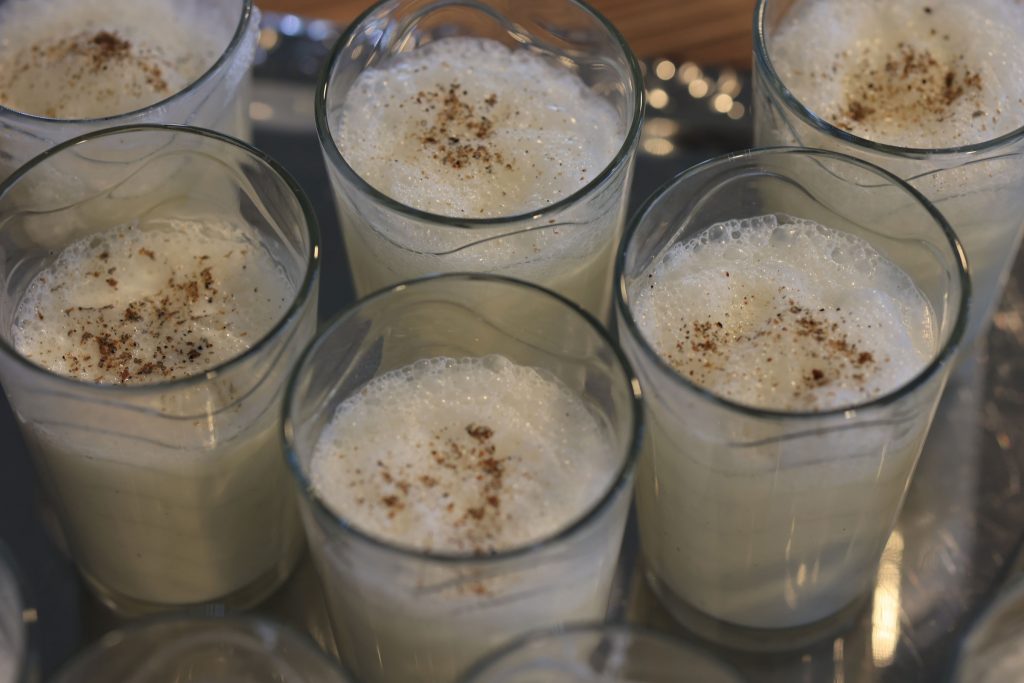
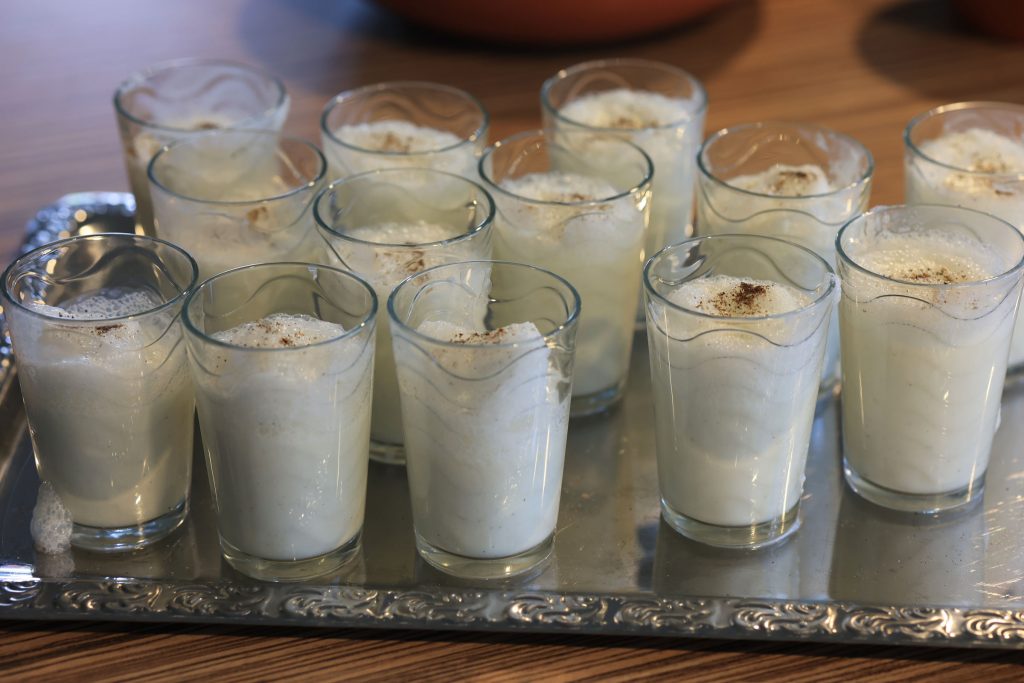
The heat of summer has a drying effect. We have to make sure we drink enough. During the cooking workshop we made two drinks that have a cooling effect on the digestive system.
CCF-Tea
The ccf-tea is the cumin-coriander-fennel tea. The ccf-tea is extremely good for balancing all three Doshas. The ccf-tea is particularly beneficial for the Pitta Dosha, as it dissipates excess heat and aids digestion. You can drink the ccf-tea all day long, all year round.
Sweet Lassi
The sweet lassi, made from cardamom and rose water, is the summer drink par excellence, because it has a cooling effect and also tastes wonderfully sweet and refreshing.
The Buffet
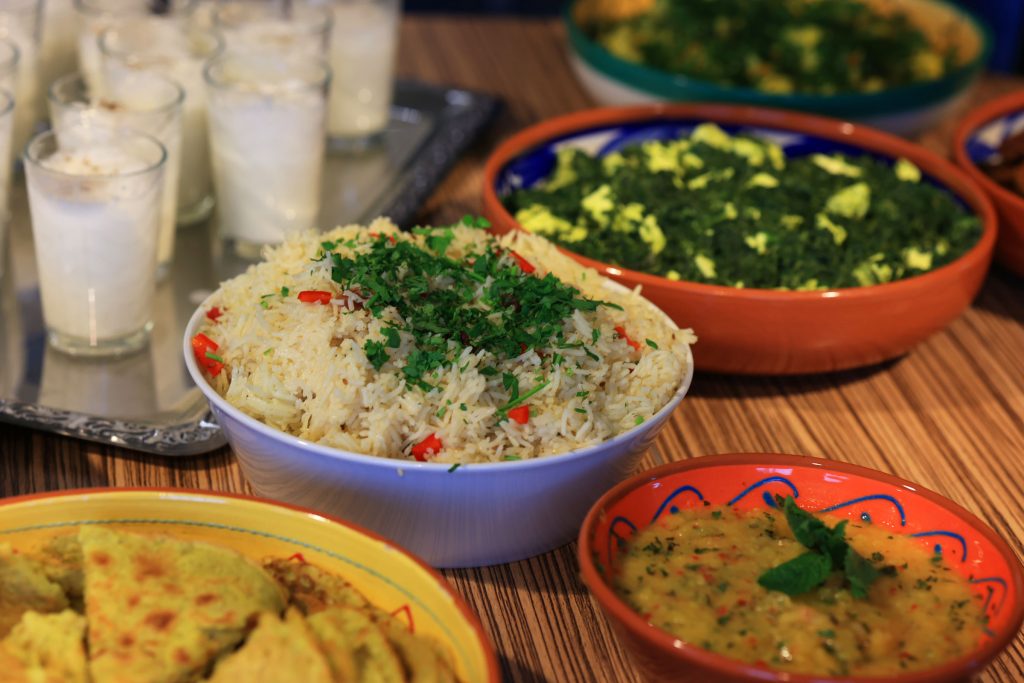
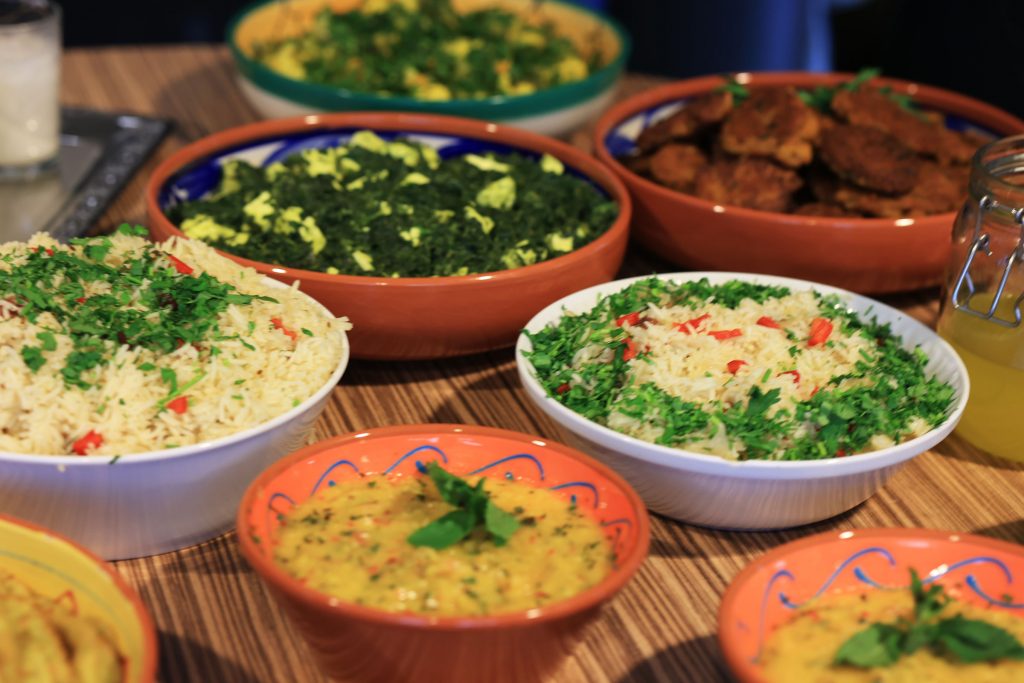
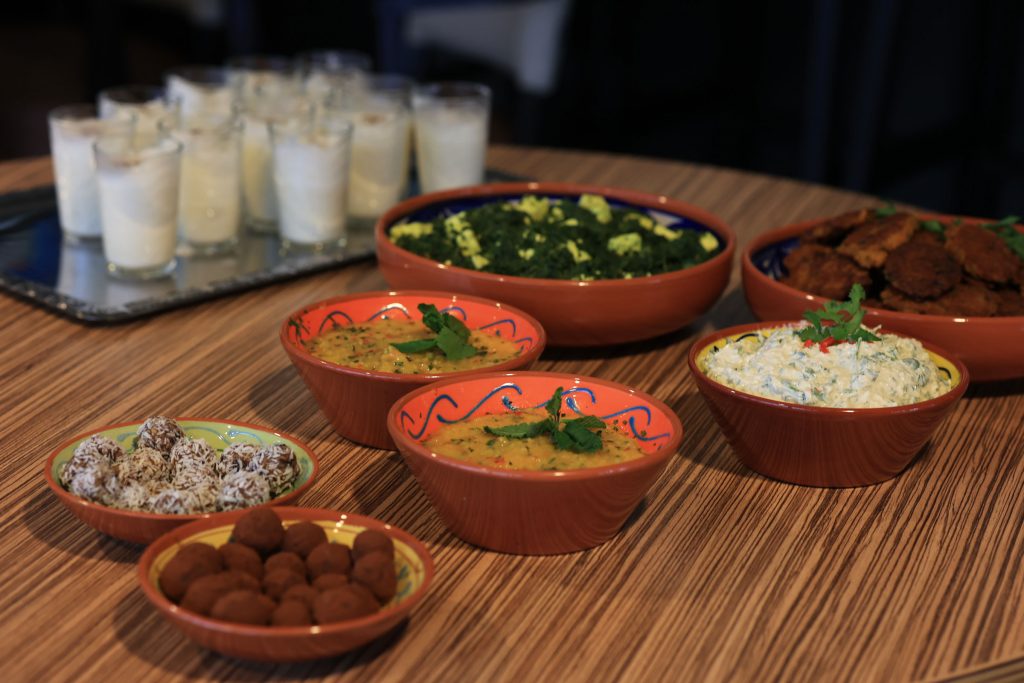
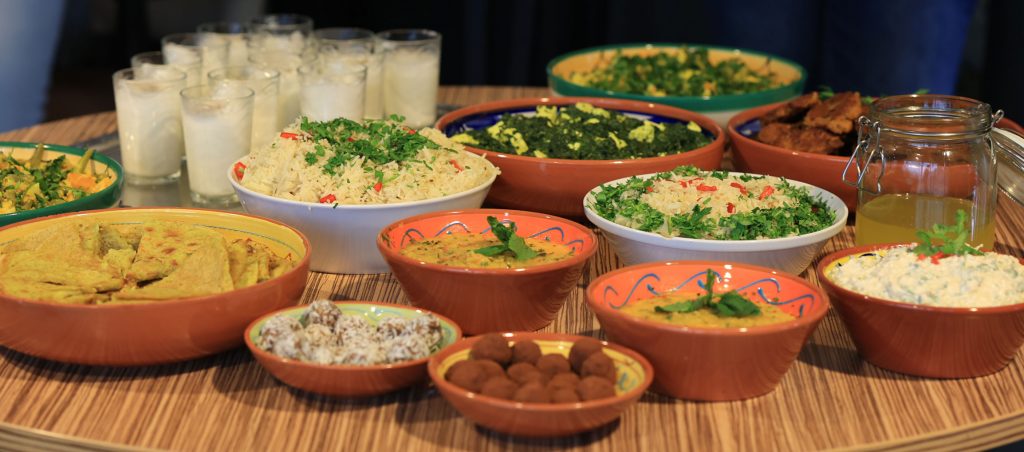
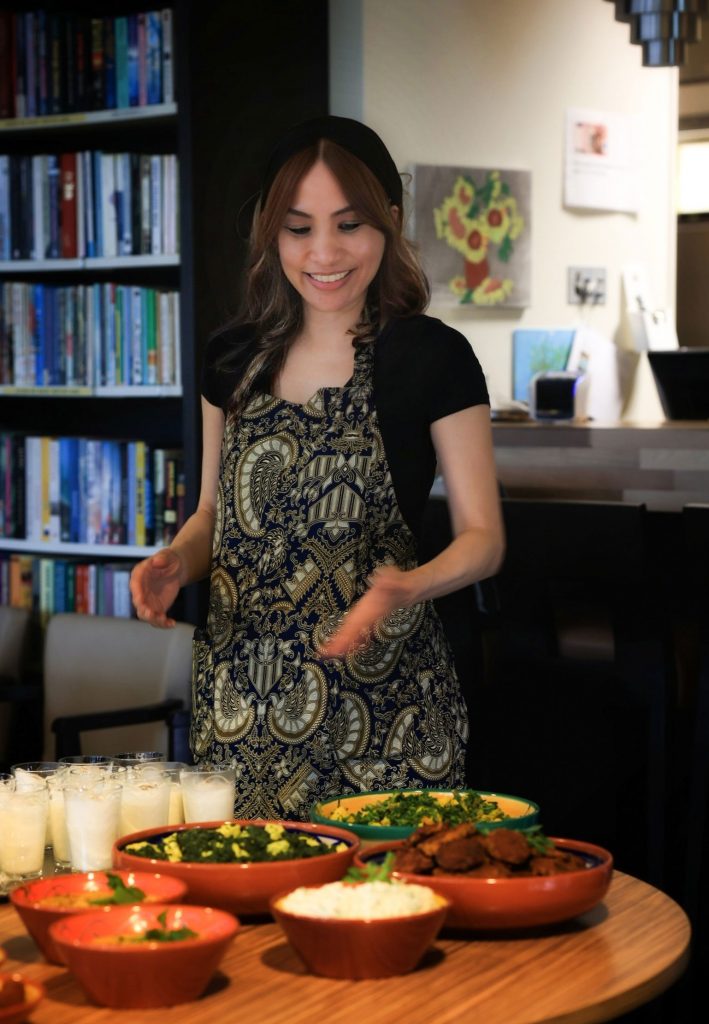
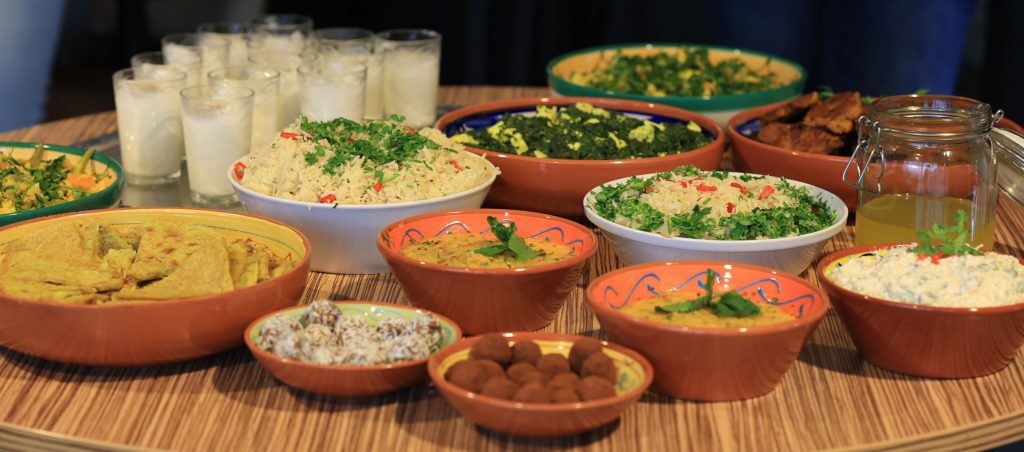
When we had finished cooking, we set the table with dishes that we made during the cooking workshop. The buffet looked festive with food served in colorful dishes. The dishes all have a cooling effect on the Pitta Dosha.
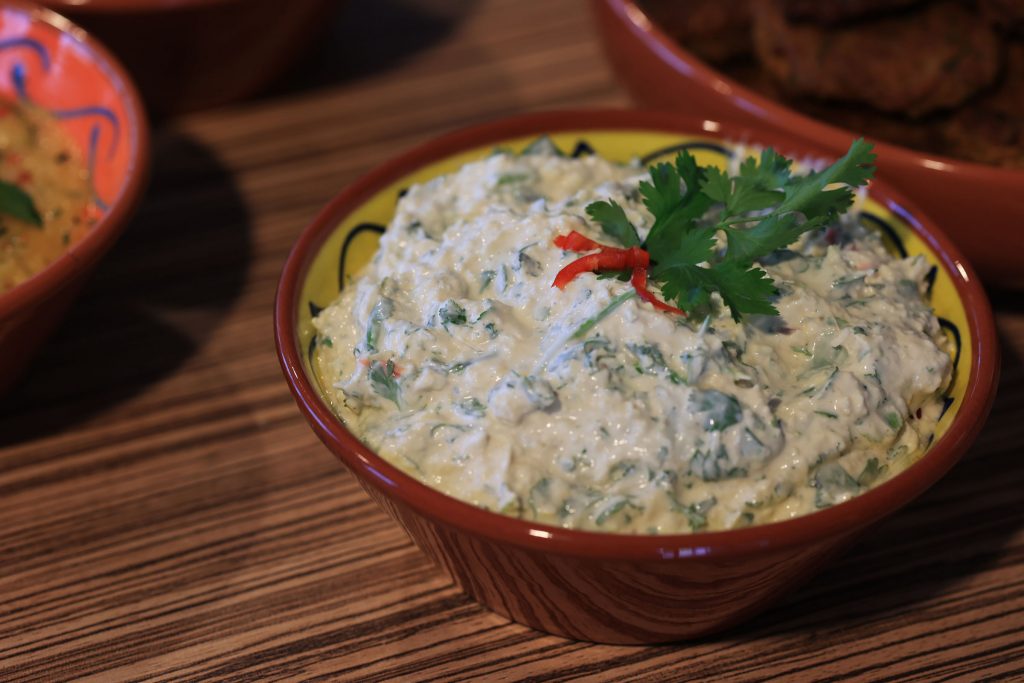
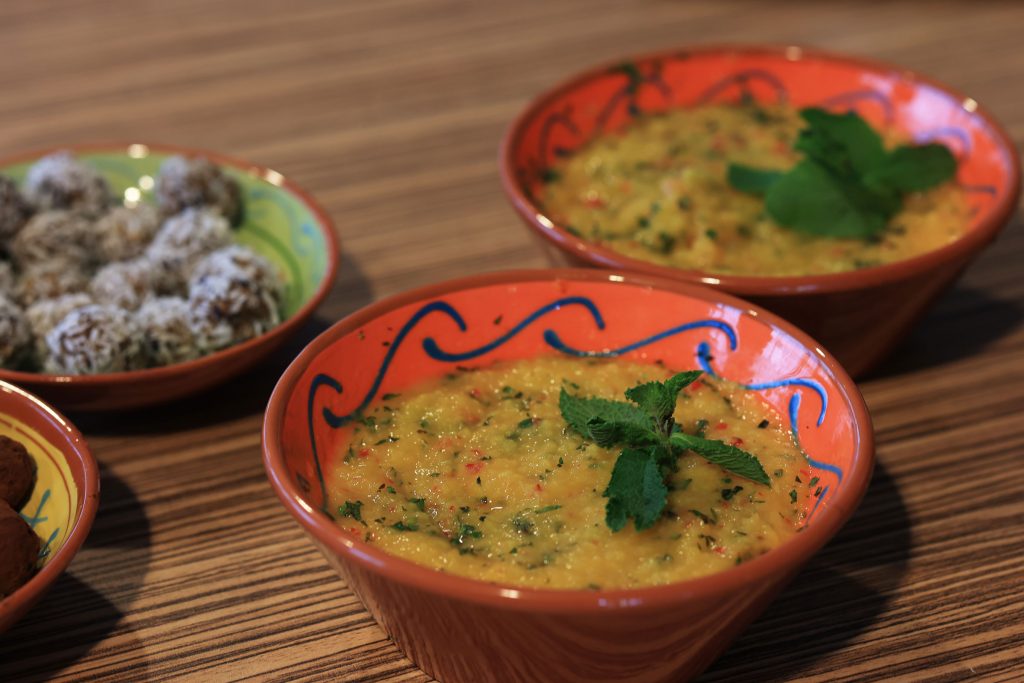
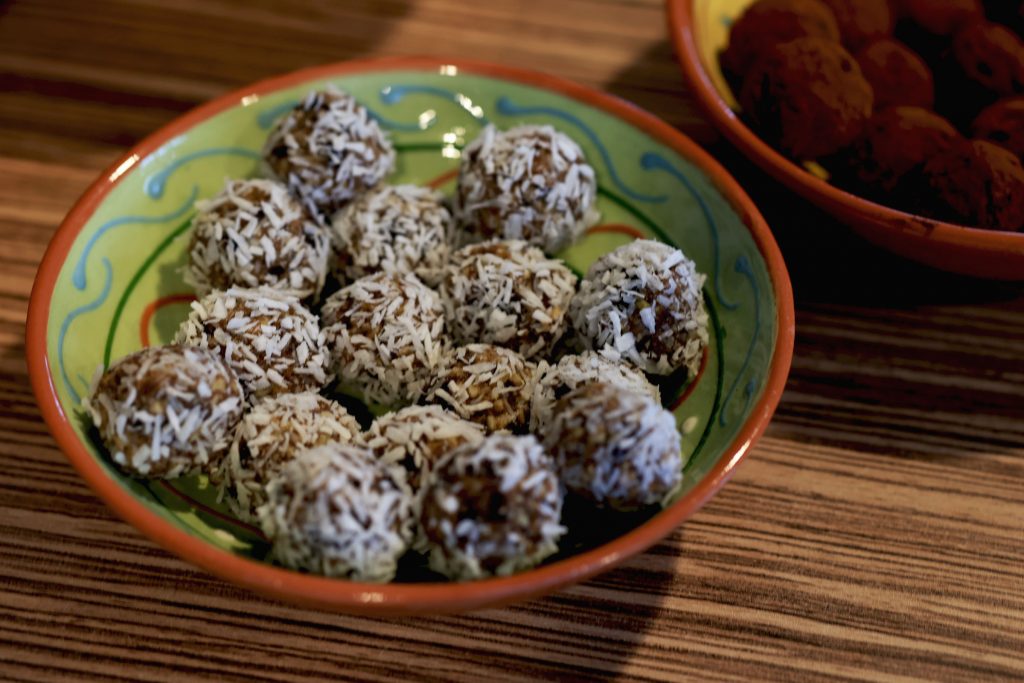
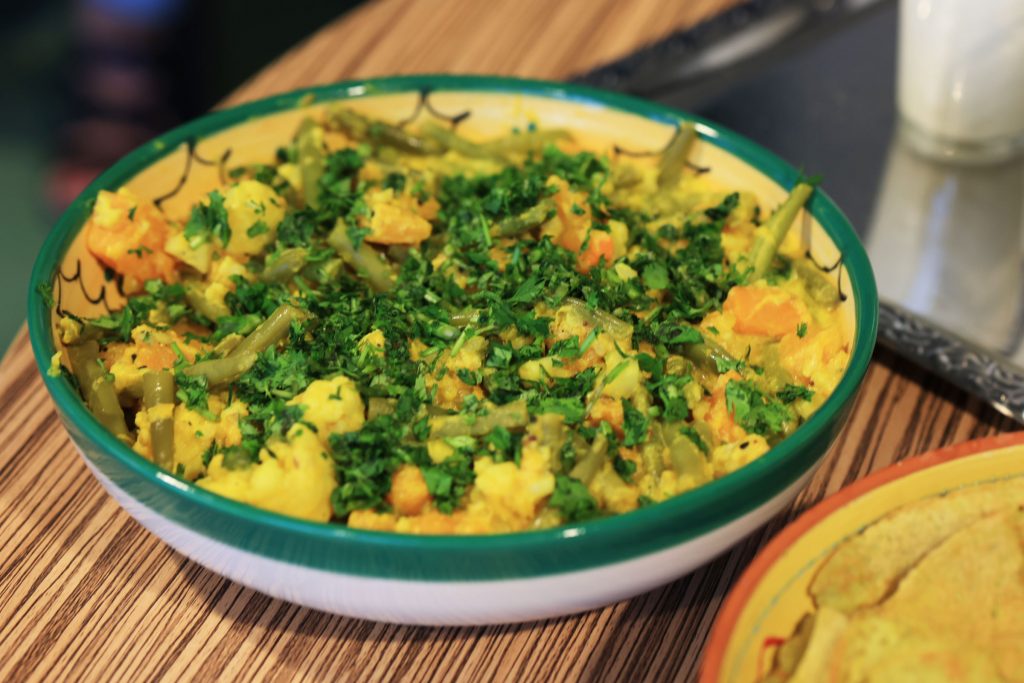
This is what we made: as a starter the agni booster, burr nut balls, coriander raita, cumin rice, curry with pancha masala, spinach with palak paneer, mango chutney with mint, mung dahl wraps with green herbs, date nut bonbons and sweet lassi and ccf tea as drinks.
In the beginning we ate in silence, to taste everything in peace and attention, to enjoy the food, and to be able to take in all the flavors. Afterwards we ate and drank together. The dishes tasted delicious. My favorite is the palak paneer with spinach, which I will try first at home. Incredibly tasty and not difficult to make.
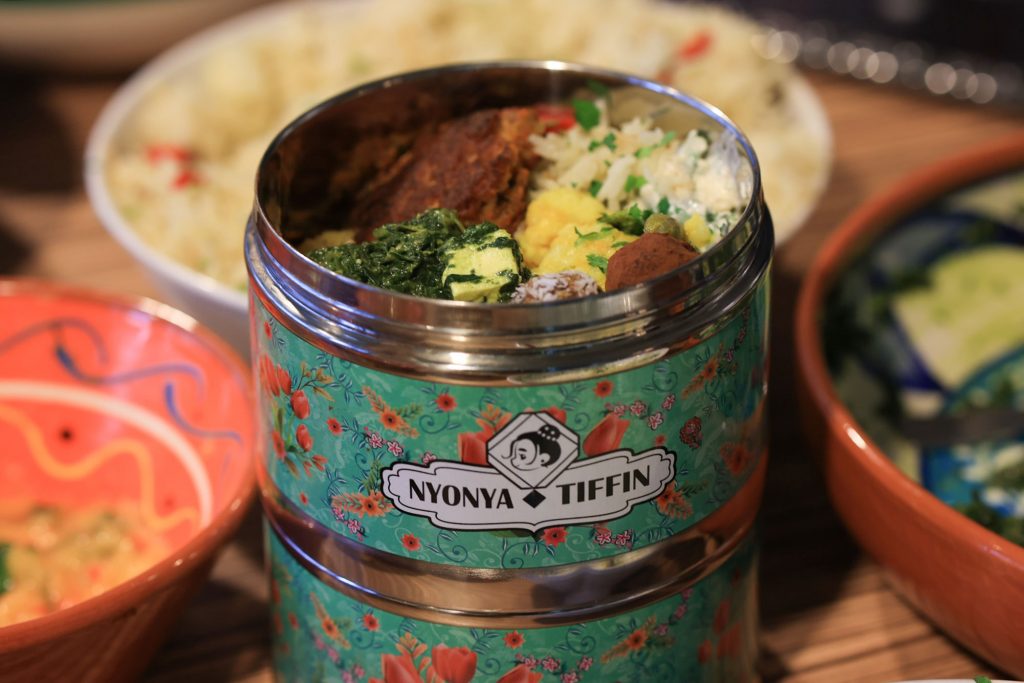
Silvia had tipped to bring a takeaway food box, should there be any left over. I brought my Nyonya Tiffin and filled it with delicious dishes.
This was a fantastic cooking workshop and I can already tell you that more Ayurvedic cooking workshops will follow. Are you coming too?
Click here if you want to read more about Vegan cooking with Vedic kitchen